
Cargo Securing for Bulk Carriers
Days of access: 91
Modules: 7
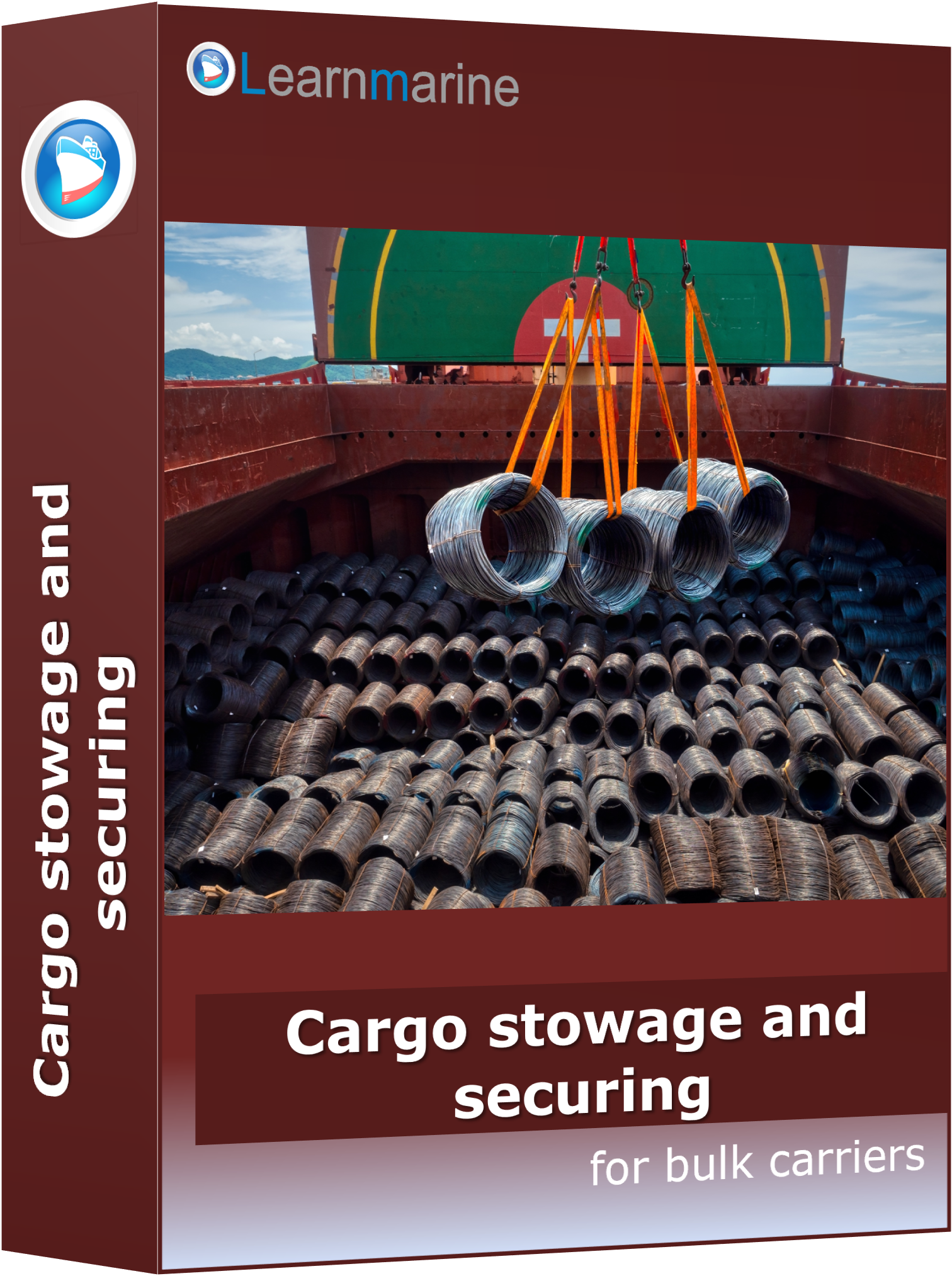
This course provides practical guidance on the safe stowage and securing of non-bulk cargoes carried on bulk carriers. It covers key regulatory requirements, shipboard responsibilities, cargo hold preparation, securing equipment, and typical cargo-specific risks for steel products, bagged cargoes, FIBCs, project cargo, heavy units, timber, and logs. The focus is on practical decision-making, recognizing unsafe arrangements, and applying cargo securing principles in real shipboard conditions.
Regulations and Guidelines
-
SOLAS 1974, as amended, Chapter VI: Carriage of Cargoes and Oil Fuels;
-
IMO Resolution A.714(17): Code of Safe Practice for Cargo Stowage and Securing (CSS Code), as amended;
-
IMO MSC.1/Circ.1353/Rev.2: Revised Guidelines for the Preparation of the Cargo Securing Manual;
-
IMO Resolution A.862(20): Code of Practice for the Safe Loading and Unloading of Bulk Carriers (BLU Code);
-
IMO Resolution A.1048(27): Code of Safe Practice for Ships Carrying Timber Deck Cargoes, 2011.
Course Content
-
Regulatory framework
-
Principles of cargo securing
-
Steel and heavy metal products
-
Bagged cargo, FIBCs and unit loads
-
Project cargo and heavy breakbulk
-
Timber and logs securing


Subscribe or Buy Course: "Cargo Securing for Bulk Carriers"
Subscribe
91 days/ 100 $
Course auto-renew is an automatic subscription option. On expiry the course fee will be paid automatically and the course will be prolonged for the next period.
Buy for
91 days/ 100 $
One time payment will give you access to the course for 91 days. After this period you will have not access ti the course.